

Stock is a foundational ingredient in cooking, playing a vital role in enhancing the flavour of countless dishes. In this comprehensive guide, we’ll delve into the art of crafting homemade stock, with a focus on using British English and precise metric measurements.
Understanding the Basics:
Stock is essentially a liquid created by simmering a combination of bones, vegetables, and herbs. Common varieties include chicken, beef, and vegetable stock. Each type offers unique flavour profiles that can complement specific recipes.
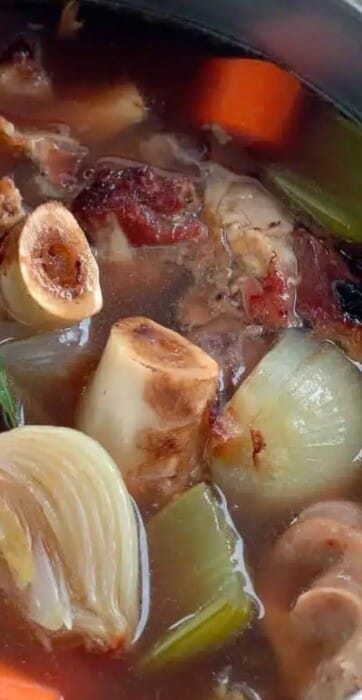
Essential Ingredients:
To embark on your stock-making journey, you’ll need the following core ingredients:
Bones: Chicken carcasses for chicken stock and beef bones for beef stock form the base of your stock. These ingredients provide the foundation for a robust and flavourful broth.
Vegetables: Onions, carrots, and celery, known as the classic mirepoix, contribute depth and aromatic qualities to your stock.
Fresh Herbs: Thyme, parsley, and bay leaves infuse your stock with delightful herbal notes.
It’s crucial to adhere to precise metric measurements, using grams for accurate ingredient portions.
Equipment Needed:
Equipping your kitchen with the right tools is essential for a successful stock-making process. Ensure you have the following equipment:
Stockpot: A generously sized, heavy-bottomed stockpot is your primary vessel for simmering the stock. Its size allows for even heat distribution and ample space for ingredients.
Strainer: A fine-mesh strainer is crucial for removing impurities and achieving a clear, clean stock.
Kitchen Scale: A dependable kitchen scale is essential for measuring ingredients accurately in grams, ensuring consistency throughout your stock-making endeavour.
The Cooking Process:
Let’s dive into the step-by-step cooking process:
Preparation: Start by washing and roughly chopping the vegetables. If you choose to roast your bones and vegetables, spread them evenly on a baking sheet and roast until they achieve a golden-brown hue. This roasting step intensifies the depth of flavour in your stock.
Simmering: Place the roasted bones, vegetables, and fresh herbs in your stockpot. Add cold water to cover the ingredients. Gradually bring the mixture to a simmer over low heat, avoiding vigorous boiling, which can result in a cloudy stock.
Skimming: As the stock simmers, skim off any impurities that rise to the surface. This crucial step ensures a clear and pristine stock.
Time: Allow the stock to gently simmer for several hours. The extended simmering period extracts the full spectrum of flavours from the ingredients, resulting in a rich and savoury stock.
Flavourful Additions:
For added depth and complexity, consider incorporating the following flavour-enhancing elements:
Storage and Preservation:
Preserving your homemade stock is essential for future culinary adventures:
Allow the stock to cool to room temperature.
Measure out portions in metric measurements using your kitchen scale.
Store your stock in airtight containers or freezer-safe bags for convenient access.
Using Homemade Stock:
Now that you’ve mastered the art of making homemade stock, you can elevate a wide array of dishes. Whether you’re preparing a comforting soup, a luscious sauce, or a flavourful risotto, your homemade stock will infuse each creation with unmatched richness and depth.
Conclusion:
Creating outstanding stock is a valuable culinary skill. Embracing British English and precise metric measurements adds authenticity to your stock-making process, ensuring consistent and exceptional results.
Closing Thoughts:
Homemade stock is the cornerstone of exceptional cooking, where simplicity meets sophistication. As you incorporate homemade stock into your culinary repertoire, you’ll unlock a world of flavour possibilities. Share your experiences, experiment with different stock varieties, and savor the culinary magic that homemade stock brings to your kitchen.
Chef Ian McAndrew’s specialist eBooks and guides are available directly on ChefYesChef, including his technical titles and autobiography. If you want more practical, chef-led reading beyond this article, you’ll find the full collection here.
Chef Ian McAndrew works with chefs, businesses, and individuals on a wide range of culinary projects, from concept development to practical problem-solving.
If you’d like to talk through an idea or need informed guidance, you’re welcome to contact him.