
Shrove Tuesday – Pancake Day – and my mouth is watering already at the thought of it. I well remember Shrove Tuesday from my childhood days, thin pancakes smeared with golden syrup for us kids while my mother always liked them with lemon and a touch of sugar. Not that I ever knew it as Shrove Tuesday, of course, to me it was always simply Pancake Day, a day to rush home from school where I had been drooling over the thought of the treat to come all day long. Now, at my ripe old age, I have gone away from the sickly sweet accompaniment of my youth, preferring them perhaps with a touch of Calvados instead.
Now let’s see. Flour. A pinch of salt. A few eggs. There is something just so cheerful about pancakes, a bit like champagne in a way, but not so frivolous. I am not talking about designer label crêpes or that throwback of the sixties and seventies, the crêpe Suzette. The culinary delicacy that was served in what was then the archetypal British restaurant, the one where the majority of the ‘posh food’ on the menu was cooked not, as one would hope, by the chef, but instead on a Primus stove in the dining room by the Maître d’. One that was, more often than not, a bad French impersonator from Spain (the same one Manuel must surely have been based upon in Fawlty Towers)!
No, I am alluding to real pancakes, the ones you can really only get at home.
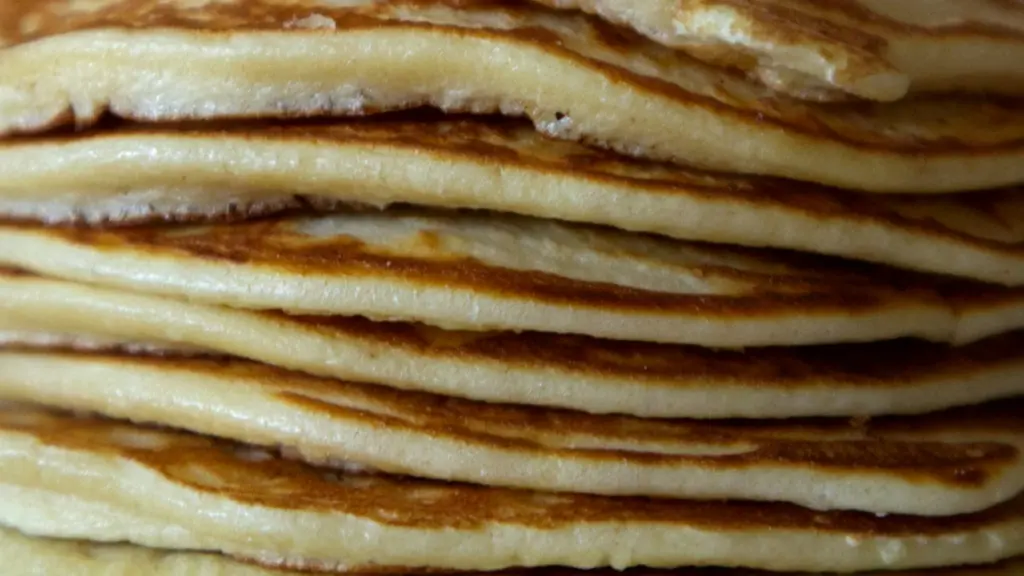
Pancakes are a delicacy eaten around the world. We find them in China, where they are oh so thin, white and often taste of uncooked flour. In Korea and Japan they make egg pancakes. In Hungary and many Eastern European countries we find blintzes, sweet cheese–filled pancakes that come with many different fillings. The Russians eat blinis made from buckwheat flour with their caviar and smoked fish. The French make crêpes and galettes, while in America the pancake is almost a national food.
They are not all just made from eggs and flour either. There are pancakes made from potato, buttermilk, sourdough and cornmeal; there are even recipes for ones made using a mix of flour and cheese, said to give the pancake a sponge-like texture. Made fresh and eaten there and then, the humble pancake is a thing of joy no matter what country it is from, but left to go cold and then reheated it becomes a lifeless rubbery disc not worthy of discussion.
Whether you like your pancakes thick and spongy or wafer thin, savoury or sweet, as you stand in your kitchen this month preparing this traditional February treat for your family just ponder a minute or two on why you are doing it and where this tradition came from. Did you, for instance, know that Shrove or ‘shriven’ means to be forgiven for your sins (sins you have first confessed to, of course)?
This year Shrove Tuesday falls on the 17th, falling as it does every year on the day before Ash Wednesday, the beginning of Lent and seven weeks before Easter. Lent, as we all know, is the beginning of the time of abstinence, a forty-day period of fasting and meditation just before Easter, a time we spend remembering how Jesus fasted in the wilderness.
In many traditions Lent is the time of the year for cleaning, in preparation for Easter and the coming of spring. First your soul, then your kitchen, then the rest of the house was cleansed and purified of the past year’s accumulations. Old clothes are mended and new ones purchased. In the Ukraine houses are whitewashed inside and out during Lent. In this way everything is made ready to face the season of salvation and rebirth, and our tradition of giving the house a good spring clean stems from this religious rite.
Known also around the world as Mardi Gras or Fetter Dienstag, which when literally translated both mean Fat Tuesday, essentially Shrove Tuesday is the time to use up all the excess fat, eggs and dairy produce left in the kitchens and larders in preparation of the forthcoming forty-day fast – exactly the right ingredients one needs to make a good pancake.
Here in Britain there is a tradition of pancake racing, especially in Olney in Buckinghamshire. It is here that each year there is a race that takes the competitors on a mad 415-yard dash.
It seems that no one is too certain of how this famous pancake race originated. One story tells us of a harassed housewife, hearing the shriving bell, dashing off to the church still clutching her frying pan which just happened to contain a pancake. Another, that the gift of pancakes may have been a form of bribe to the ringer, or sexton, that he might ring the bell sooner; for the ringing of the church bell was the signal for the beginning of the day’s holiday and enjoyment, no less than to summon the people to the shriving service at which they would be shriven of their sins before the long Lenten fast.
The race was first run in the year 1445, pancakes at that time being a popular dish and receiving the royal favour. It was run on Shrove Tuesday, the day before Lent, and the whole day was given over to a festival of celebrations, which formed a part of the last fling celebrations before the pious fast began. The race continued through the centuries and is known to have still taken place during the War of the Roses.
This rather bizarre race is one that, in these times of political correctness and equality, only women can enter. They must also be a minimum of 18 years of age and either have lived in the town of Olney for at least three months immediately prior to the event or, if living away, have their permanent home in the town. For the race they must wear what was regarded as the traditional costume of a housewife, including a skirt, apron and head covering, though it is not essential that they are married.
The prize for coming first? Something to be treasured for life, a kiss from the verger of St Peter and St Paul’s.
Warning bells are rung from the church steeple and the traffic comes to a halt. The race is then started by the churchwarden at precisely 11.55 am, using the large bronze ‘pancake bell’ normally on display in the museum. Pancakes are tossed at the start and the winner is required to toss her pancake again at the finish.
Originally run from the Bull Hotel to the parish church of St Peter and St Paul, it is now run from the Market Place to a point midway down Church Lane, but still the important 415 yards.
Of all the recipes available for making pancakes, here are some of my favourite ideas for serving them. The choice of what you serve them with is obviously vast, but how about serving buttermilk pancakes with warmed cherries in a cinnamon syrup with fresh cream or crème fraîche, or with strawberries and an orange custard?
Chef Ian McAndrew’s specialist eBooks and guides are available directly on ChefYesChef, including his technical titles and autobiography. If you want more practical, chef-led reading beyond this article, you’ll find the full collection here.
Chef Ian McAndrew works with chefs, businesses, and individuals on a wide range of culinary projects, from concept development to practical problem-solving.
If you’d like to talk through an idea or need informed guidance, you’re welcome to contact him.