
“Season to taste” is one of the most common instructions in cooking. It appears in recipes, training kitchens, television programs, and cookbooks for every level. It sounds reasonable, even reassuring. Taste the food, decide what it needs, adjust accordingly.
The problem is that it explains almost nothing.
In practice, “season to taste” collapses under real kitchen conditions. It assumes that taste is stable, that the food is still receptive, and that seasoning is something that happens at the end. None of those assumptions hold true in professional cooking, and very few hold true at home either.
Most seasoning failures are not caused by a lack of salt. They are caused by misunderstanding what salt does, when it should be used, and what seasoning actually means.
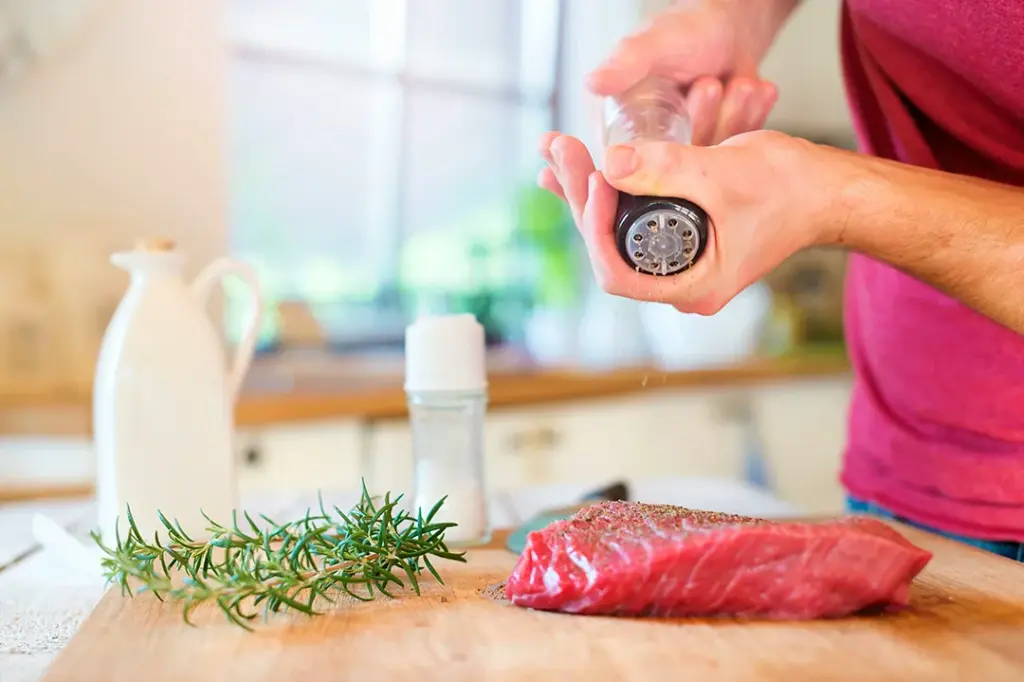
Taste varies. Palates differ between individuals, change with fatigue, are affected by heat, environment, stress, and even time of day. A dish tasted cold behaves differently once hot. A sauce tasted alone behaves differently once served with garnish, protein, and fat.
Professional seasoning cannot rely on this variability. Consistency demands something more stable than instinct.
Seasoning, when done properly, is not a personal preference layered on at the end. It is a structural process that happens while food is still open to change. It is about preparing ingredients so that they arrive at the palate already aligned, not about correcting them once they are finished.
This is the distinction “season to taste” never makes. It treats seasoning as a reaction, not a decision.
One of the most persistent misunderstandings in cooking is the idea that salt adds flavour. It does not.
Salt amplifies what is already present. It suppresses bitterness, sharpens sweetness, and stabilises savoury notes. Used well, it disappears. Used poorly, it announces itself.
Food that tastes “salty” has usually been seasoned late or aggressively. Food that is properly seasoned tastes clearer, rounder, and more complete, without calling attention to the salt itself.
This is why early seasoning matters. When salt is added before structure sets, it integrates. It moves with moisture, alters proteins, and becomes part of the food rather than something sitting on it. When added late, it can only sit on the surface and shout.
The difference is not subtle. Early seasoning builds flavour from within. Late seasoning compensates for what was missed.
Two dishes can contain the same amount of salt and taste completely different. The difference is timing.
Once proteins tighten, starches gelatinise, or vegetables collapse, salt loses access. At that point, additional salt does not integrate. It accumulates. The result is often food that tastes both under-seasoned and over-salted at the same time.
This is why “season to taste” often leads to escalation. A dish tastes flat. More salt is added. The surface becomes salty, but the interior remains dull. More salt follows. Balance is never achieved, because the opportunity for integration has passed.
Professional seasoning is about control before correction. It relies on understanding when food is receptive, not on how confident the final adjustment feels.
Few ingredients carry as much misplaced suspicion as MSG. It is often dismissed as artificial, lazy, or dangerous, despite being chemically identical to glutamates found naturally in foods such as parmesan, anchovies, tomatoes, and mushrooms.
MSG does not replace salt, and it does not function like salt. On its own, it tastes flat and unremarkable. Its value only appears in context.
Salt defines edges. MSG fills the middle.
Used alongside salt, MSG deepens savoury perception without increasing sharpness. Importantly, it contains significantly less sodium than salt, meaning it can be used to enhance flavour while reducing overall sodium load.
The mistake is treating MSG as a fix rather than a tool. Overused, it flattens flavour and produces a dull, lingering savouriness. Used with restraint and intention, it allows salt to work more effectively, not less.
The issue is not whether MSG is “good” or “bad”. It is whether it is being used deliberately, and for the right reason.
Pepper is routinely added where salt should have been handled earlier. This confusion is widespread and damaging.
Salt alters perception. Pepper alters taste.
When pepper is used to correct under-seasoning, it masks imbalance rather than resolving it. Heat and aroma distract the palate, giving the impression of liveliness while leaving the underlying structure unresolved. The result is often food that feels busy but unfocused.
If a dish only comes alive once pepper is added, the salt decision was probably missed earlier.
This does not mean pepper is unnecessary. It means it should be used as a flavour choice, not a corrective measure. Treating it as seasoning blurs responsibility and encourages noise rather than clarity.
Seasoning is not something that happens at the pass. It is something that happens throughout cooking.
Early salting establishes a baseline. Mid-process adjustments refine balance. Late seasoning, if used at all, should be minimal and intentional.
Finishing salt, in particular, should never be automatic. It is not a signature or a flourish. It is a decision made only when texture or contrast genuinely improves the dish. Many foods do not benefit from it at all.
Theatre has no place here. Confidence expressed through restraint is far more instructive than dramatic gestures at the end.
The phrase survives because it is easy. It sounds intuitive, avoids explanation, and places responsibility on the taster rather than the process.
In reality, it teaches nothing about timing, structure, or judgement. It produces cooks who react rather than plan, correct rather than control, and rely on confidence instead of understanding.
Seasoning cannot be reduced to instinct without sacrificing consistency. It is learned thinking, not bravado.
Better seasoning rarely leads to more salt. It usually leads to less.
When salt is used early, deliberately, and with awareness of structure, the need for correction diminishes. Flavour becomes clearer. Balance becomes easier to maintain. Food tastes finished sooner and stays finished longer.
This shift, from instinct to judgement, is the foundation of professional seasoning.
Salt influences flavour, texture, preservation, fermentation, health, and safety. Understanding it properly requires more than tips or rules of thumb. It requires a framework.
This article highlights why common habits fail. It cannot fully address how to work differently across varied ingredients, processes, and conditions.
That is the purpose of The Salt Spectrum.
The Salt Spectrum is not a recipe book, and it is not a catalogue of salts. It is a professional guide to salt as a decision making tool.
It examines how salt behaves, why timing matters, how enhancers such as MSG fit into seasoning systems, and where restraint is more effective than confidence. It is written for cooks who want to replace guesswork with judgement and instinct with understanding.
If seasoning is part of your responsibility, as a cook, a chef, or someone teaching others, it deserves more than “season to taste”.
You can find The Salt Spectrum here:
https://chefyeschef.co.uk/item/the-salt-spectrum/
Chef Ian McAndrew’s specialist eBooks and guides are available directly on ChefYesChef, including his technical titles and autobiography. If you want more practical, chef-led reading beyond this article, you’ll find the full collection here.
Chef Ian McAndrew works with chefs, businesses, and individuals on a wide range of culinary projects, from concept development to practical problem-solving.
If you’d like to talk through an idea or need informed guidance, you’re welcome to contact him.